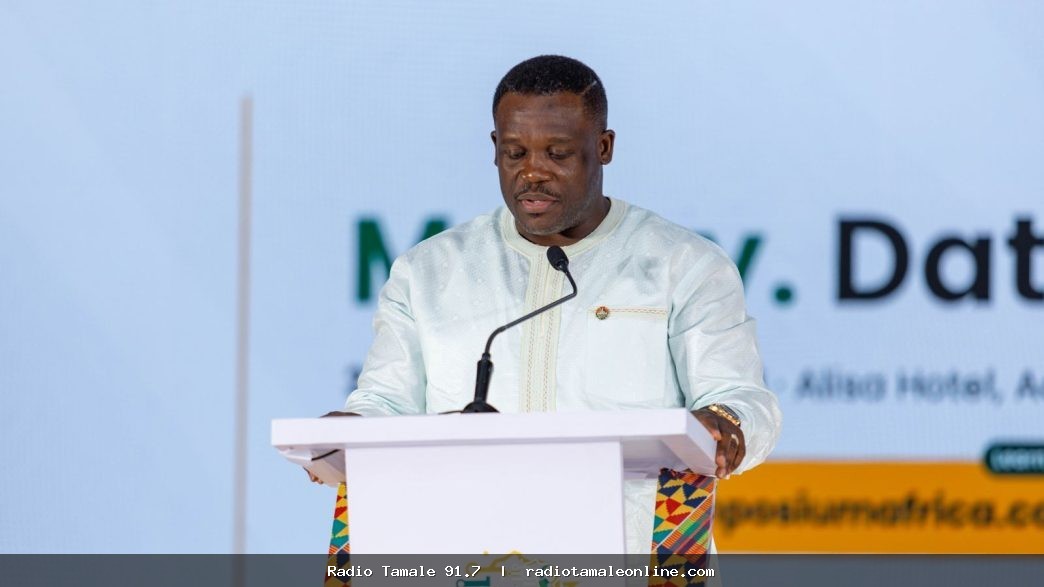
The Minister for Communication, Digital Technology and Innovations, Samuel Nartey George, has announced plans to invest nearly US$300 million in developing Ghana’s own artificial intelligence computing infrastructure as part of efforts to strengthen the country’s digital sovereignty and reduce dependence on foreign technology providers.
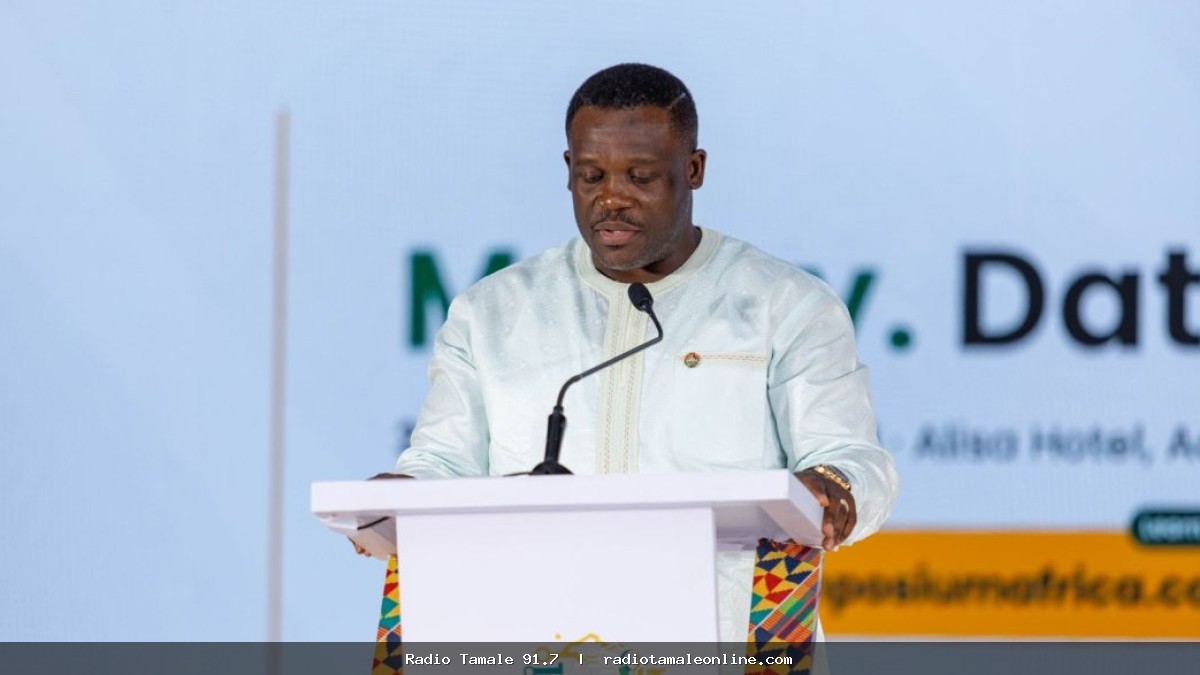
He made the announcement on Thursday, November 26, 2026, at the 8th Privacy Symposium Africa, organised by Unwanted Witness with support from the Media Foundation for West Africa.
He said the investment would support the construction of a National AI Computing Centre to provide Ghanaian researchers and innovators with the infrastructure needed to develop, test and deploy artificial intelligence solutions locally, while serving the wider West African sub-region.
Speaking at the symposium on the theme “Money, Data, Control,” Mr George stressed that owning digital infrastructure was critical to determining who controls the value generated from data and technology.
“Buying computing services from the world and co-owning their infrastructure that produces them are two different things. Both are connected, however, but only one is in control. He who owns the infrastructure is really the one in control,” he said.
The Minister said Ghana was also strengthening its artificial intelligence governance framework through its 10-year National Artificial Intelligence Strategy, alongside plans to train one million people in digital skills and establish a National Data Exchange Hub to integrate 48 government data registries currently operating independently.
He further disclosed that the government had introduced a central technical review process for public sector AI procurement to assess issues including interoperability, data protection, cybersecurity, sustainability and local skills transfer before approving the acquisition of artificial intelligence systems.
Executive Director of the Data Protection Commission, Dr Arnold Kavaarpuo, said the growing economic value of data, particularly in the age of artificial intelligence, raised critical questions about who benefits from its exploitation, who controls it and what safeguards exist for individuals whose personal information is collected.
He noted that Africa must address existing gaps in data protection and regulatory capacity while preparing for emerging technological challenges, adding that regulators needed collaboration and shared expertise to respond effectively to the rapidly evolving digital environment.
Meanwhile, Chairperson of the Board of Governors of Unwanted Witness, Mike Ssegawa, cautioned that Africa’s digital transformation must not undermine the rights, dignity and freedoms of its people.
He said innovation and human rights protection should not be treated as competing priorities, stressing that a thriving digital economy depended on trust, accountability, transparency and responsible data governance. Mr Ssegawa called for stronger collaboration among governments, regulators, the private sector, academia and civil society to ensure Africa’s digital future is shaped by the interests and rights of its citizens.
Source: Asaaseradio







0 Comments